
Bedside Manner: Why the Right Nightstand Changes the Room
It may be one of the smaller pieces in a bedroom, but a nightstand has a surprising amount of work to do. It needs to hold the practical things — a lamp, a book, a glass of water, perhaps the charger we’re all pretending isn’t there — while also sitting directly beside one of the largest visual anchors in the room.
In other words, the bedside deserves a little more consideration than simply finding something that fits.
At AK&CO, we look at the nightstand as part of the composition of the entire bedroom. Its scale, material, shape and personality can quietly reinforce the design — or become the unexpected element that makes the room interesting.
LET IT HAVE A PERSONALITY
Not every nightstand needs to disappear quietly beside the bed.
A sculptural piece can introduce movement and personality to an otherwise tailored bedroom. Here, dramatic burl wood, curved lines and a flash of gold become a counterpoint to the dark upholstered bed and clean architecture surrounding it.
It’s furniture, certainly. But it also functions almost like an object of art.
That tension is often what keeps a beautifully designed room from feeling overly coordinated. One unexpected piece gives the eye somewhere to land.
SOMETIMES THE BEST NIGHTSTAND ISN’T A NIGHTSTAND
We use the term nightstand loosely.
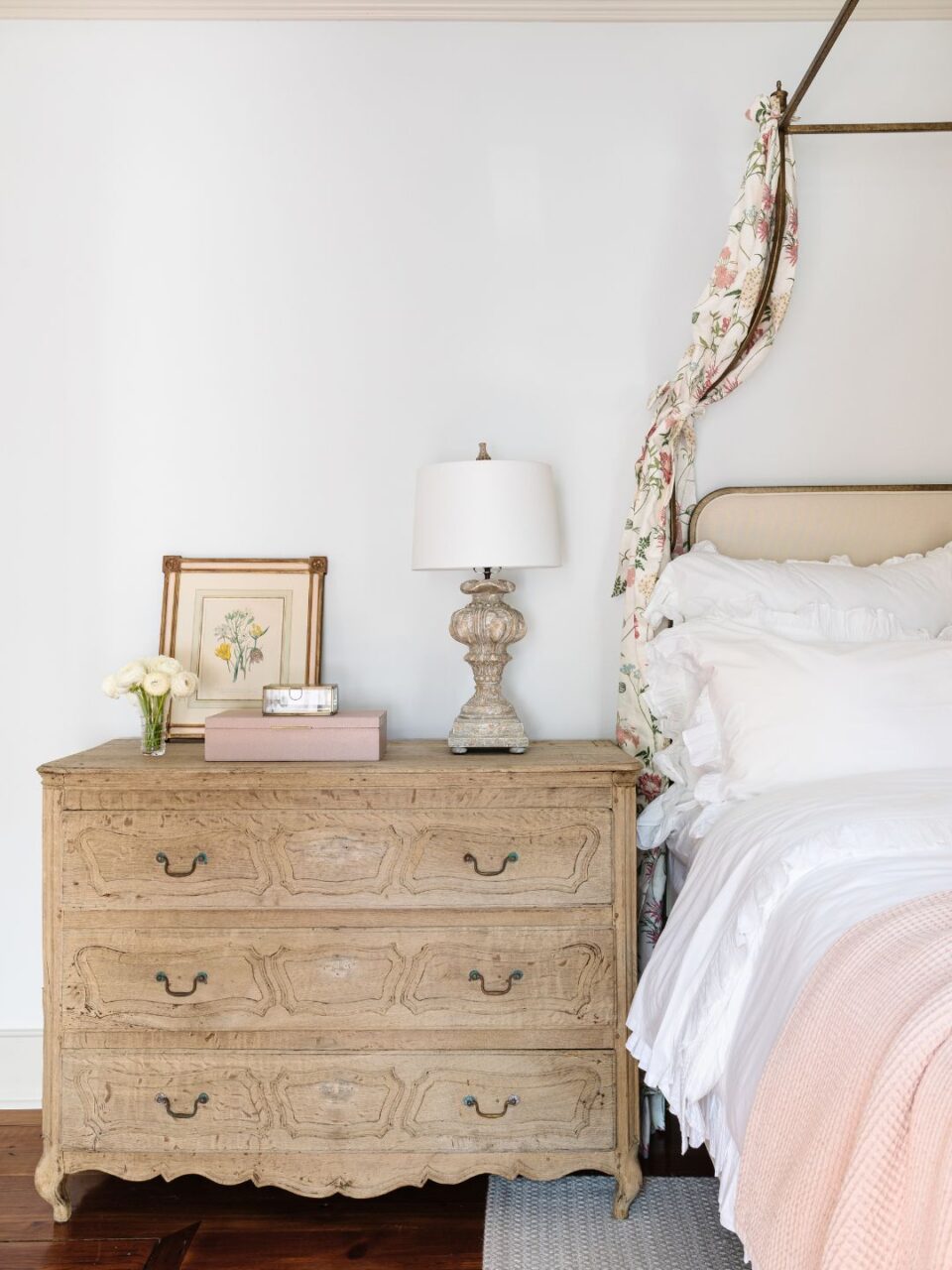
An antique chest, small dresser, side table or vintage find can all work beautifully at the bedside. In fact, choosing something that wasn’t necessarily designed as a nightstand can bring considerably more character to a room.
The antique chest in this bedroom adds age, warmth and history against crisp white bedding and a delicate floral canopy. It also offers something a petite bedside table doesn’t: serious storage.
Form and function do not have to be mutually exclusive.
CONSIDER THE ARCHITECTURE AROUND IT
The right bedside piece should make sense not only with the bed, but with everything happening around it.
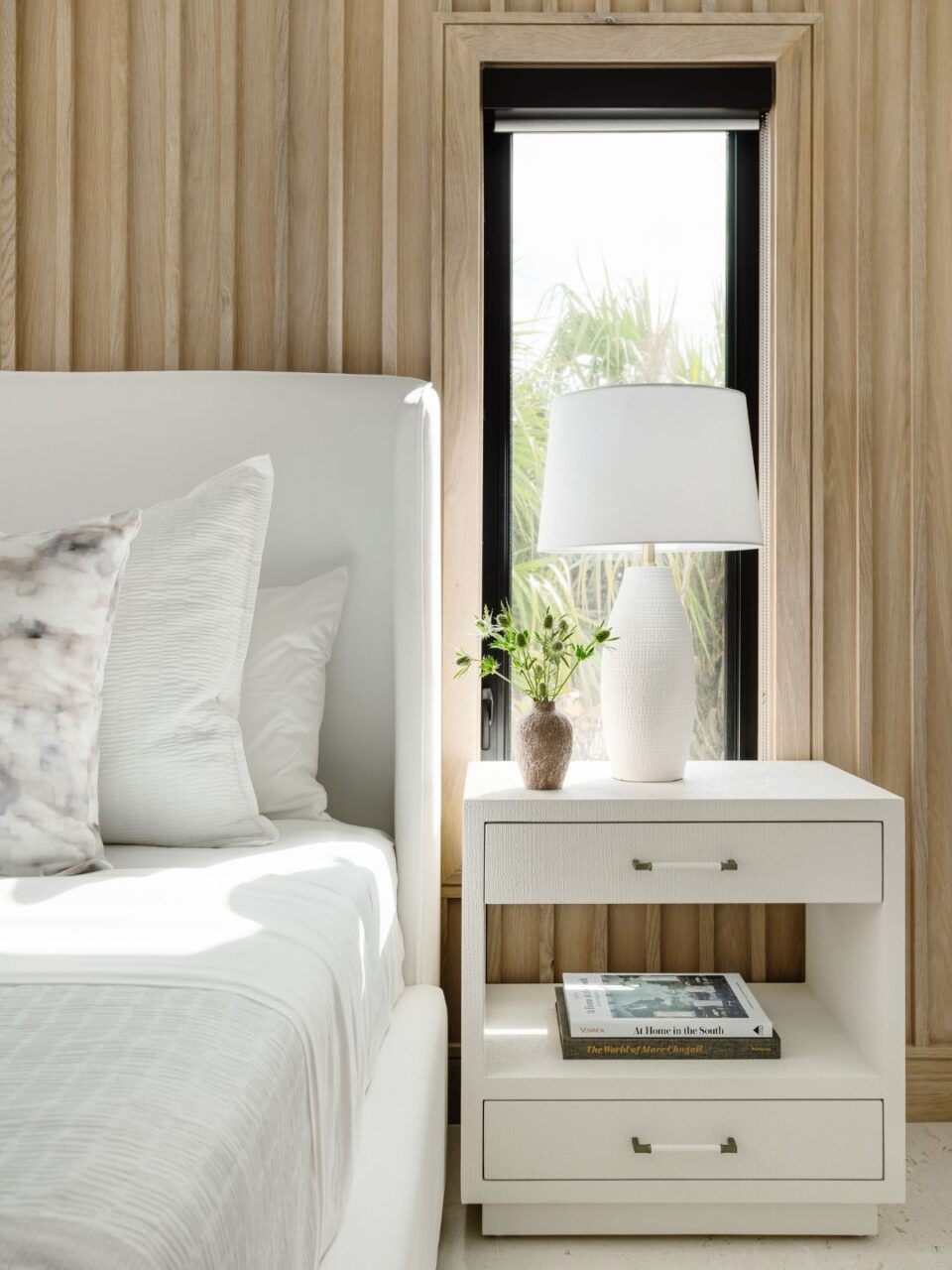
Window locations, mattress height, wall treatments, lighting and available floor space all influence what belongs beside a bed.
In this bedroom, a clean, tailored nightstand allows the surrounding materials to do the talking. Its quiet texture relates to the softness of the upholstered bed, while its simple shape provides contrast against the natural movement of the wood-paneled walls.
It doesn’t need to be the loudest element in the room to be an important one.
KNOW WHEN TO KEEP IT LIGHT
Sometimes a room calls for less visual weight.
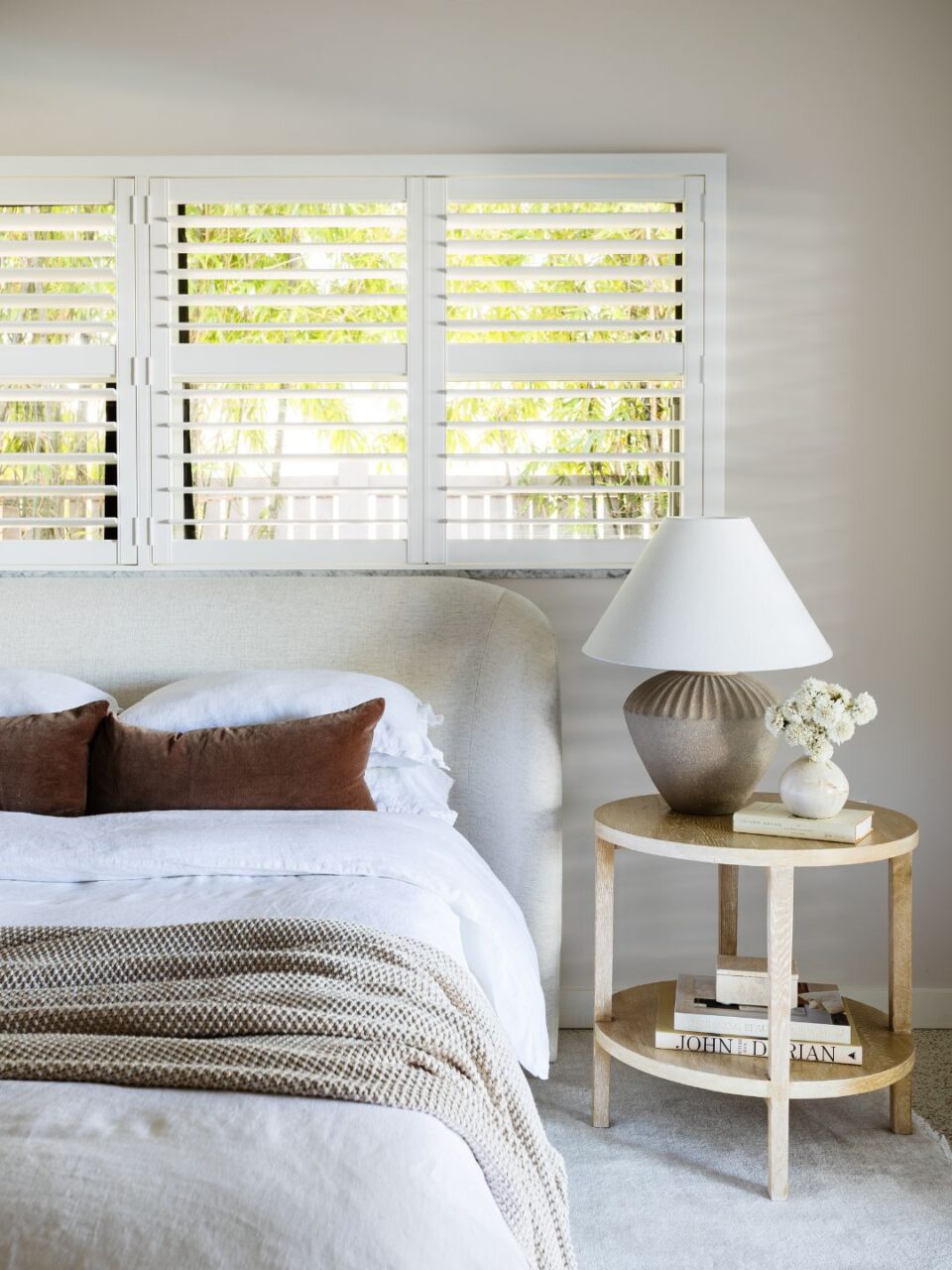
An open, round table can keep a bedroom feeling airy while still creating enough surface area for the bedside essentials. The curves also soften a room filled with larger upholstered forms and straight architectural lines.
And because the lower shelf is visible, even practical storage becomes part of the styling.
This is where restraint matters. A lamp with the right scale, a few books, something organic and perhaps one personal object are often enough. We want a bedside table to feel considered — not like it was styled solely for the photograph.
SCALE FIRST. STYLING SECOND.
Before thinking about flowers, books or decorative objects, we think about proportion.
A nightstand that’s too small can feel insignificant beside a substantial bed. One that’s too tall or oversized can make the entire arrangement feel awkward. Ideally, the tabletop relates comfortably to the height of the mattress and gives the bed enough visual breathing room.
From there, styling becomes the finishing layer.
And that layer should still feel like someone actually lives there.
A beautiful lamp. Something to read. A small object collected while traveling. Fresh flowers when you have them. The everyday items inevitably make their way in, too — and good design leaves room for those.
Because ultimately, the goal isn’t a perfectly styled nightstand.
It’s a bedroom that feels personal, functional and complete.